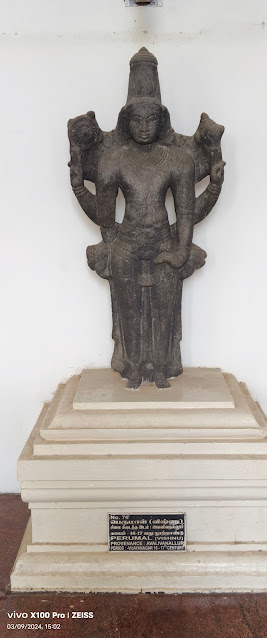
Friday, March 15, 2024

Sri Mukundamala - 10


Deenabandhu Temple

॥ ॐ नमो भगवते वासुदेवाय ॥

सरसिजनयने सशङ्खचक्रे मुरभिदि मा विरमस्व चित्त रन्तुम् ।   
सुखतरमपरं न जातु जाने  हरिचरणस्मरणामृतेन तुल्यम् ॥ १०॥
Translation: Oh Mind! Never cease to revel in Hari, the slayer of Mura, endowed with lotus eyes and holding the Śaṅkha and Cakra, for I have never known anything else more delightful than the nectarine remembrance of the Lord's lotus feet!
Notes: This type of dialogue with one's mind is typical in many devotional hymns, and Bhajagovindam is a classic example. The devotee realises that his mind is his most disobedient accomplice, and he needs to school it. He advises the mind never to leave the nectarine remembrance of the Lord. Now who is speaking? It is the higher mind or the inner intelligence or Buddhi talking to the lower mind driven by external attractions. In any case, we all feel such a division in our minds all the time.  This is pithily stated in the Bhagavadgītā Ch.6 Sl.5 wherein Bhagavān urges the seeker to lift himself by his own effort of taming the mind, as the lower mind can be either an enemy or a friend of the higher mind of the seeker. 
व्याकरणांशाः
सरसिजनयने सशङ्खचक्रे मुरभिदि मा विरमस्व चित्त रन्तुम् ।
सुखतरमपरं न जातु जाने हरिचरणस्मरणामृतेन तुल्यम् ॥ १०॥
सरसिज-नयने, स-शङ्ख-चक्रे, मुरभिदि, मा, विरमस्व, चित्त, रन्तुम्, सुखतरम्, अपरम्, न, जातु, जाने, हरि-चरण-स्मरण-अमृतेन, तुल्यम्
सन्धयः
सुखतरम्= मोऽनुस्वारः
स्मरण+अमृतेन= अकः सवर्णे दीर्घः
आकाङ्क्षा-अन्वयः
चित्त! सरसिज-नयने स-शङ्ख-चक्रे मुरभिदि रन्तुम् मा विरमस्व सुखतरम् अपरम् हरि-चरण-स्मरण-अमृतेन तुल्यम् न जातु जाने
Oh Mind! Never cease to revel in Hari, the slayer of Mura, endowed with lotus eyes and holding the Śaṅkha and Cakra, for have never known anything else more delightful than the nectarine remembrance of the Lord's lotus feet!
सुबन्तप्रक्रिया
सरसिज-नयने, स-शङ्ख-चक्रे = अ, पुं, ७.१, ङि, आद्गुणः
मुरभिदि = द्, पुं, ७.१, ङि, वर्णमेलनम्
मा, न, जातु = अव्ययम्
चित्त = अ, पुं, १.१ सम्बोधनम्, सुँ, एङ्ह्रस्वात् सम्बुद्धेः
सुखतरम्, अपरम्, तुल्यम् = अ, नपुं, २.१, अम्, अतोऽम्, अमि पूर्वः
हरि-चरण-स्मरण-अमृतेन=अ, नपुं, ३.१, टा, टाङसिङसामिनात्स्याः, आद्गुणः
तिङन्तप्रक्रिया
जाने=ज्ञा, क्र्यादिः आत्मनेपदी (उभय), लट्, उत्तमपुरुषः, एकवचनम्
विरमस्व= वि+रम्, भ्वादिः, आत्मनेपदी, लोट्, मध्यमपुरुषः, एकवचनम्
समासाः, तद्धिताः, कृदन्ताः
रन्तुम् = रम्, तुमुन्, कृदन्तः, अव्ययम्
सरसिज-नयने= सरसि जायते सरसिजम् केवलसमासः, सरसिजमिव नयनम् उपमानपूर्वपदकर्मधारयः, नयनम् यस्य सः, तस्मिन्, बहुवृहिः
स-शङ्ख-चक्रे= शङ्खं च चक्रं च शङ्खचक्रम् समाहारद्वन्द्वः, शङ्खचक्रेण सह वर्तते, सशङ्खचक्रः, तस्मिन्, सहपूर्वपदबहुव्रीहिः
मुरभिदि= मुरं भिनत्ति, उपपदसमासः मुरभिद्, तस्मिन्
हरि-चरण-स्मरण-अमृतेन= हरेः चरणम् ६तत्, तस्य स्मरणम् ६तत्, स्मरणम् अमृतमिव उपमानोत्तरपदकर्मधारयः, तेन

***
॥ ॐ नमो भगवते वासुदेवाय ॥

Thursday, March 14, 2024

Sri Mukundamala - 9


Saraswati Mahal Museum, Tanjavur

॥ ॐ नमो भगवते वासुदेवाय ॥

करचरणसरोजे कान्तिमन्नेत्रमीने श्रममुषि भुजवीचिव्याकुलेऽगाधमार्गे ।
हरिसरसि विगाह्यापीय तेजोजलौघं भवमरुपरिखिन्नः खेदमद्य त्यजामि ॥ ९॥
Translation: Lost in the burning desert of worldly life, I shall plunge deep into the lake of Hari, full of lotuses in the form of His hands and feet, full of luminous fish in the form of His divine eyes, with waves splashed by His tremendous arms, deep and cool, as I drink the life-giving water in plenty, and abandon all my distress!
Notes:  Kulaśekhara visualises himself lost, burnt and dry, in the desert of this worldly life full of getting and spending, and then he sees himself in the divinely cool lake of Hari, the Lord, whose lotus-hands and lotus-feet and fish-like glowing eyes are inviting him to plunge and drink deep, enjoying the waves raised by Hari's own mighty arms. He feels totally rejuvenated and refreshed, and loses all distress! Visualisation is a powerful tool for anyone, especially for a devotee who wants to dwell in the lake of devotion!

व्याकरणांशाः
करचरणसरोजे कान्तिमन्नेत्रमीने श्रममुषि भुजवीचिव्याकुलेऽगाधमार्गे ।
हरिसरसि विगाह्यापीय तेजोजलौघं भवमरुपरिखिन्नः खेदमद्य त्यजामि ॥ ९॥
पदच्चेदः
कर-चरण-सरोजे, कान्तिमत्-नेत्र-मीने श्रम-मुषि, भुज-वीचि-व्याकुले,अगाअमार्गे, हरि-सरसि, वि-गाह्य, आपीय, तेजो-जल-ओघम्, भव-मरु-परि-खिन्नः, खेदम्,अद्य,त्यजामि
सन्धयः
कान्तिमत्ने+त्र= यरोऽनुनासिकेऽनुनासिको वा
व्याकुले+अगाअमार्गे=एङः पदान्तादति
वि-गाह्य+आपीय=अकः सवर्णे दीर्घः
तेजो+जल= ससजुषो रुः, हशि च, आद्गुणः
जल+ओघम्=वृद्धिरेचि
आकाङ्क्षा-अन्वयः
भव-मरु-परि-खिन्नः श्रम-मुषि कर-चरण-सरोजे कान्तिमत्-नेत्र-मीने भुज-वीचि-व्याकुले अगाधमार्गे हरि-सरसि वि-गाह्य, तेजो-जल-ओघम् आपीय, खेदम् अद्य त्यजामि

Lost in the burning desert of worldy life, I shall plunge deep into the lake of Hari, full of lotuses in the form of His hands and feet, full of luminous fish in the form of His divine eyes, with waves splashed by His tremendous arms, deep and cool, as I drink the life-giving water in plenty, and abandon all my distress!
सुबन्तप्रक्रिया
कर-चरण-सरोजे, भुज-वीचि-व्याकुले, अगाधमार्गे= अ, नपुं, ७.१, ङि, आद्गुणः
कान्तिमत्-नेत्र-मीने श्रम-मुषि= ष्, नपुं, ७.१, ङि, वर्णमेलनम्
हरि-सरसि= स्, नपुं, ७.१, ङि, वर्णमेलनम्
वि-गाह्य= कृदन्त-अव्ययम्
आपीय= कृदन्त-अव्ययम्
तेजो-जल-ओघम्, खेदम्= अ, पुं, २.१, अम्, अमि पूर्वः
भव-मरु-परि-खिन्नः= अ, पुं, १.१, सुँ, ससजुषो रुः, खरवसानयोर्विसर्जनीयः
अद्य= अव्ययम्
तिङन्तप्रक्रिया
त्यजामि= त्यज्, भ्वादिः, परस्मैपदी, लट्, उत्तमपुरुषः, एकवचनम्
समासाः, तद्धिताः, कृदन्ताः
कर-चरण-सरोजे= करश्च चरणं च, करचरणम् समाहारद्वन्द्वः, करचरणम् सरोजमिव, उपमानकर्मधारयः, सरोजमस्य अस्तीति बहुव्रीहिः, तस्मिन्
कान्तिमत्-नेत्र-मीने= कान्तिः अस्य अस्ति, कान्तिमत् (मतुप् तद्धितः), कान्तिमत् नेत्रम्, कर्मधारयः, नेत्रम् मीनमिव, उपमानकर्मधारयः, मीनम् अस्यास्ति, बहुव्रीहिः, तस्मिन्
श्रम-मुषि= श्रमं मुषति, श्रममुष् उपपदसमासः, तस्मिन्
भुज-वीचि-व्याकुले= भुजस्य वीचिः ६तत्, वीचिना व्याकुलम् ३तत्, व्याकुलमस्ति अस्य, बहुव्रीहिः, तस्मिन्
अगाधमार्गे= अगाधं मार्गम् कर्मधारयः, मार्गमस्य अस्तीति, बहुव्रीहिः, तस्मिन्
हरि-सरसि= हरि एव सरस्, तस्मिन्, अवधारणापूर्वपदकर्मधारयः
वि-गाह्य, आपीय= वि+गह्, आङ्+पा, ल्यबन्तः, कृदन्तः, अव्ययम्
भव-मरु-परि-खिन्नः= परि-खिन्नः, कर्तरि-क्त कृदन्तः, भवः एव मरुः, अवधारणापूर्वपदकर्मधारयः, मरौ परिखिन्नः ७तत्

***

॥ ॐ नमो भगवते वासुदेवाय ॥

Wednesday, March 13, 2024

Sri Mukundamala - 8


Śrī Śārṅgapāṇī Temple, Kumbhakonam

॥ ॐ नमो भगवते वासुदेवाय ॥

चिन्तयामि हरिमेव सन्ततं मन्दमन्दहसिताननाम्बुजं ।
नन्दगोपतनयं परात्परं नारदादिमुनिवृन्दवन्दितम् ॥ ८॥
Translation: I constantly meditate only on Hari, my Lord with that soft and slight smile on His lotus face, the beloved son of Nandagopa of Gokula, the Supreme Lord beyond all, worshipped devoutly by assemblies of great sages starting with Nārada!
Notes:  Kulaśekhara discloses in this verse that he has transcended his physical and existential limitations and begun to meditate only on Hari. He recalls with supreme delight the sport and pastimes of the cowherd boy and His divine smile that plays on His lotus-like face. Kulaśekhara envies the great sages like Nārada who are constantly praying to Hari. This is the best condition for any devotee to be in!!!

व्याकरणांशाः
चिन्तयामि हरिमेव सन्ततं मन्दमन्दहसिताननाम्बुजं।
नन्दगोपतनयं परात्परं नारदादिमुनिवृन्दवन्दितम् ॥ ८॥
पदच्चेदः
चिन्तयामि, हरिम्,एव, सन्ततम्, मन्द-मन्द-हसित-आनन-अम्बुजम्, नन्द-गोप-तनयम्, परात्, परम्, नारद-आदि-मुनि-वृन्द-वन्दितम्
सन्धयः
सन्ततम्, मन्द-मन्द-हसित-आनन-अम्बुजम्, नन्द-गोप-तनयम्= मोऽनुस्वारः
नारद+आदि= अकः सवर्णे दीर्घः
आकाङ्क्षा-अन्वयः
मन्द-मन्द-हसित-आनन-अम्बुजम् नन्द-गोप-तनयम् परात् परम् नारद-आदि-मुनि-वृन्द-वन्दितम् हरिम् एव सन्ततम् चिन्तयामि
I constantly meditate only on Hari, my Lord with that soft and slight smile on His lotus face, the beloved son of Nandagopa of Gokula, the Supreme Lord beyond all, worshipped devoutly by assemblies of great sages starting with Nārada!
सुबन्तप्रक्रिया
हरिम्= इ, पुं, २.१, अम्, अमि पूर्वः
एव, सन्ततम् = अव्ययम्
मन्द-मन्द-हसित-आनन-अम्बुजम्, नन्द-गोप-तनयम्, नारद-आदि-मुनि-वृन्द-वन्दितम्, परम्= अ, पुं, २.१, अम्, अमि पूर्वः
परात्= अ, पुं, ५.१, ङसिँ, टाङसिङसामिनात्स्याः, अकः सवर्णे दीर्घः
तिङन्तप्रक्रिया
चिन्तयामि= चिन्त्, चुरादिः, परस्मैपदी, लट्, उत्तमपुरुषः, एकवचनम्
समासाः, तद्धिताः, कृदन्ताः
मन्द-मन्द-हसित-आनन-अम्बुजम्= मन्दं मन्दं हसितम् आननम्=कर्मधारयः, आननम् अम्बुजमिव=उपमानकर्मधारयः, आननाम्बुजम् यस्य सः, तम् = बहुव्रीहिः
नन्द-गोप-तनयम्= नन्दः इति गोपः=कर्मधारयः, तस्य तनयः= ६तत्, तम्
नारद-आदि-मुनि-वृन्द-वन्दितम्= नारदः आदिः यस्य सः= नारदादिः, नारदादिः मुनयः=कर्मधारयः, तेषां वृन्दम्, ६तत्, तेन वन्दितः ३तत्, तम्

***
॥ ॐ नमो भगवते वासुदेवाय ॥

Tuesday, March 12, 2024

Sri Mukundamala - 7


॥ ॐ नमो भगवते वासुदेवाय ॥

कृष्ण त्वदीयपदपङ्कजपञ्जरान्तः अद्यैव मे विशतु मानसराजहंसः ।
प्राणप्रयाणसमये कफवातपित्तैः कण्ठावरोधनविधौ स्मरणं कुतस्ते ॥ ७॥

Translation: Oh Kṛṣṇa, let the royal swan of my mind rest just now in the cage of Your lotus feet! For, at the moment of life ebbing away from my body, with my voice choked with the three humours of phlegm, air and bile ( i.e. diseased), how shall I remember You!?
Notes:  Now Kulaśekhara realises it is mere rodomontade (bluster) to assert to the Lord that he shall think of the Lord's lotus feet at the moment of his death. His thoughts would be severely hampered by a state of ill-health that precedes most cases of death. So the devotee now prays to the Lord that his mind should be caged right now in the Lord's lotus feet! This is indeed the wisest thing one can do. Bhagavān describes, in the eighth chapter of the ŚrīmadBhagavadgītā, the two paths taken by the soul - one of liberation and the other of rebirth, based on what the Jīva thinks of at his moment of death. This is in answer to the specific question of Arjuna about how to remember the Lord at the moment of death. Then the Lord says this:
नैते सृती पार्थ जानन्योगी मुह्यति कश्चन । तस्मात्सर्वेषु कालेषु योगयुक्तो भवार्जुन ॥ ८-२७॥
Translation: Oh, Arjuna, hearing of these two paths of the afterlife one of which will be taken based on what the Yogī may think of at the moment of his death, the Yogi is not confused. Instead, he engages in Yoga constantly, because death can come at any moment!

व्याकरणांशाः
कृष्ण त्वदीयपदपङ्कजपञ्जरान्तः अद्यैव मे विशतु मानसराजहंसः ।
प्राणप्रयाणसमये कफवातपित्तैः कण्ठावरोधनविधौ स्मरणं कुतस्ते ॥ ७॥
पदच्चेदः
कृष्ण, त्वदीय-पद-पङ्कज-पञ्जरान्तः, अद्य, एव, मे, विशतु, मानस-राज-हंसः, प्राण-प्रयाण-समये, कफ-वात-पित्तैः, कण्ठ-अवरोधन-विधौ, स्मरणम्, कुतः, ते
सन्धयः
अद्य+एव= एचोऽयवायावः
पञ्जरान्तः, हंसः= ससजुषो रुः, खरवसानयोर्विसर्जनियः
पित्तैः+कण्ठ= ससजुषो रुः, खरवसानयोर्विसर्जनीयः, कुप्वोः ≍क≍पौ च
स्मरणम्= मोऽनुस्वारः
कुतः+ते = ससजुषो रुः, खरवसानयोर्विसर्जनीयः, विसर्जनीयस्य सः
आकाङ्क्षा-अन्वयः
कृष्ण! अद्य एव मे मानस-राज-हंसः त्वदीय-पद-पङ्कज-पञ्जरान्तः विशतु प्राण-प्रयाण-समये कफ-वात-पित्तैः कण्ठ-अवरोधन-विधौ कुतः ते स्मरणम्
Oh Kṛṣṇa, let the royal swan of my mind rest just now in the cage of Your lotus feet! For, at the moment of life ebbing away from my body, eith my voice choked with the three humours of phlegm, air and bile ( i.e. diseased), how shall I remember You!?
सुबन्तप्रक्रिया
कृष्ण= अ, पुं, १.१, सुँ, एङ्ह्रस्वात् सम्बुद्धेः
त्वदीय-पद-पङ्कज-पञ्जरान्तः= अव्ययम् (तद्धितः)
अद्य, एव,कुतः = अव्ययम्
मे= अस्मद्, ६.१, ङस्, अन्वादेशे तेमयावेकवचनस्य
मानस-राज-हंसः= अ, पुं, १.१, सुँ, ससजुषो रुः, खरवसानयोर्विसर्जनीयः
प्राण-प्रयाण-समये= अ, पुं, ७.१, ङि, वर्णमेलनम्
कफ-वात-पित्तैः= अ, पुं, ३.३, भिस्, अतो भिस ऐस्, वृद्धिरेचि, ससजुषो रुः, खरवसानयोर्विसर्जनीयः
कण्ठ-अवरोधन-विधौ= इ, स्त्री, ७.१, ङि, अच्च घेः, वृद्धिरेचि
स्मरणम्= अ, नपुं, १.१, सुँ, अतोऽम्, अमि पूर्वः
कुतः= अव्ययम्
ते= युष्मद्, ६.१, ङस्, अन्वादेशे तेमयावेकवचनस्य
तिङन्तप्रक्रिया
विशतु= विश्, भ्वादिः, परस्मैपदी, लोट्, प्रथमपुरुषः, एकवचनम्
समासाः, तद्धिताः, कृदन्ताः
कृष्ण= कर्षतीति कृष्णः कृदन्तः, हे
त्वदीय-पद-पङ्कज-पञ्जरान्तः= तव इदम् त्वदीयम् (तद्धितः), पदम् वङ्कजमिव उपमानोत्तरपदकर्मधारयः, त्वदीयं पदपङ्कजम् कर्मधारयः, त्वदीयपदपङ्कजमेव पञ्जरम् -अवधारणापूर्वपदकर्मधारयः, तस्य अन्तः ६तत्
मानस-राज-हंसः= राजा हंसः कर्मधारयः, मानसः राजहंसः इव, उपमानोत्तरपदकर्मधारयः
प्राण-प्रयाण-समये= प्राणस्य प्रयाणम् ६तत्, प्रयाणस्य समयः, तस्मिन्, ६तत्
कफ-वात-पित्तैः= कफश्च वातश्च पित्तश्च = कफवातपित्ताः, तैः,इतरेतरद्वन्द्वः
कण्ठ-अवरोधन-विधौ= कण्ठस्य अवरोधनम् ६ तत्, तस्य विधिः ६तत्, तस्मिन्

***
॥ ॐ नमो भगवते वासुदेवाय ॥

Thursday, March 7, 2024

Sri Mukundamala - Shlokas 7-11


 ॥ ॐ नमो भगवते वासुदेवाय ॥

***

As I am travelling, I have decided to share the shlokas and their rough meaning here for the next 5 days. I shall write detailed blogs on the shlokas on my return. Thank you.

कृष्ण त्वदीयपदपङ्कजपञ्जरान्तः अद्यैव मे विशतु मानसराजहंसः ।

प्राणप्रयाणसमये कफवातपित्तैः कण्ठावरोधनविधौ स्मरणं कुतस्ते ॥ ७॥ 

चिन्तयामि हरिमेव सन्ततं मन्दमन्दहसिताननाम्बुजं

नन्दगोपतनयं परात् परं नारदादिमुनिवृन्दवन्दितम् ॥ ८॥

करचरणसरोजे कान्तिमन्नेत्रमीने श्रममुषि भुजवीचिव्याकुलेऽगाधमार्गे ।

हरिसरसि विगाह्यापीय तेजोजलौघं भवमरुपरिखिन्नः खेदमद्य त्यजामि ॥ ९॥

सरसिजनयने सशङ्खचक्रे मुरभिदि मा विरमस्व चित्त रन्तुम् ।   

सुखतरमपरं न जातु जाने  हरिचरणस्मरणामृतेन तुल्यम् ॥ १०॥

माभीर्मन्दमनो विचिन्त्य बहुधा यामीश्चिरं यातनाः   नामी नः प्रभवन्ति पापरिपवः स्वामी ननु श्रीधरः ।

आलस्यं व्यपनीय भक्तिसुलभं ध्यायस्व नारायणं लोकस्य व्यसनापनोदनकरो दासस्य किं न क्षमः ॥ ११॥


General Meaning:

6. Oh Lord, the Master of Fate, I don't care whether I sojourn in heaven or hell, in the sky or in the netherworld, as You wish! I shall be focussed on thinking of Your lotus feet, far superior to the autumnal lotus blooms, even at the moment of my death.

7.  Now that I think of it, Oh, Kṛṣṇa, better You lock my swan of a mind inside Your lotus feet, for how will I, at the moment of my death, with the body wracked by phlegm, air and bile, think of You!?

8. Oh, how blessed am I that I am constantly thinking of Hari, son of Nandagopa, the Supreme, worshipped by sages like Nārada, with His bewitching smile adorning His lotus-like face!

9. I am tired and worn out wandering this desert of worldly existence, so let me plunge and refresh myself in the lake of the Lord's presence, and drink deep of the nectarine water- his lake that is filled with his lotuses of hands and feet, the fish of Hies eyes, and the waves raised by the swinging of His mighty arms!

10. Oh mind, stray not, cease not, from dwelling in the Lord's infinite glory and beauty, as the Vanquisher of Mura has incomparably beautiful lotus-like eyes, and shines holding the Śaṅkha and Cakra. Know for sure there is nothing even close to the bliss of this contemplation of the Lord's lotus feet.

11. Oh foolish mind, get out of this paroxysm of fear, thinking of all the endless punishments that Yama will impose for your sins. Don't you know that these punishments have no effect since you are now under the care of our Lord, Śrīdhara!? Abandon your sloth. Resort to the easiest path - the path of Bhakti to the Lord. Meditate on Nārayaṇa. For the One who removes all the sorrows of the entire world, what is impossible to eradicate when it comes to His own devotee?

***

 ॥ ॐ नमो भगवते वासुदेवाय ॥


Sri Mukundamala - 6


॥ ॐ नमो भगवते वासुदेवाय ॥

दिवि वा भुवि वा ममास्तु वासो नरके वा नरकान्तक प्रकामम् ।
अवधीरितशारदारविन्दौ चरणौ ते मरणेऽपि चिन्तयामि ॥ ६॥

Translation: Oh Lord, You who can end the hellish life by Your mere will! As You wish, let me live either in heaven, or on earth, or in hell! But surely,  shall meditate, even at death's door, on Your feet that put the autumnal lotus blooms to shame by their beauty!
Notes:  Now Kulaśekhara wants to make it crystal clear to the Lord Mukunda: Mukunda is the overlord of Karma dispensation, just as He can grant liberation, even from hell that one falls into as punishment for one's sins. But here, the devotee says that his fate, determined by his Karmas, may take him to heaven, hell, or rebirth on this earth. He doesn't care about it! All that he commits to is that he shall think of the Lord's lotus feet at the moment of his death. That should be sufficient redemption in all ways!
व्याकरणांशाः
दिवि वा भुवि वा ममास्तु वासो नरके वा नरकान्तक प्रकामम् ।
अवधीरितशारदारविन्दौ चरणौ ते मरणेऽपि चिन्तयामि ॥ ६॥
पदच्चेदः
दिवि, वा, भुवि, वा, मम,अस्तु, वासः, नरके, वा, नरक-अन्तक, प्रकामम्, अवधीरित-शारद-अरविन्दौ, चरणौ, ते, मरणे,अपि, चिन्तयामि
सन्धयः
मम+अस्तु, नरक+अन्तक, शारद+अरविन्दौ= अकः सवर्णे दीर्घः
वासः+नरके= ससजुषो रुः, हशि च, आद्गुणः
मरणे+अपि= एङः पदान्तादति
आकाङ्क्षा-अन्वयः
नरक-अन्तक! प्रकामम् दिवि वा भुवि वा नरके वा मम वासः अस्तु! ते अवधीरित-शारद-अरविन्दौ चरणौ मरणे अपि चिन्तयामि।
Oh Lord who can end the hellish life by Your mere will, as You wish, let me live either in heaven, or on earth, or in hell! In Your feet that in comparison put the wintry lotus blooms to shame by their beauty, shall I constantly meditate, even at death's door!
सुबन्तप्रक्रिया
दिवि = व्, स्त्री, ७.१, ङि, वर्णमेलनम्
वा, प्रकामम्, अपि= अव्ययम्
भुवि = ऊ, स्त्री, ७.१, ङि, अचि श्नुधातुभ्रुवां य्वोरियङुवङौ, वर्णमेलनम्
मम = अस्मद्, ६.१,ङस्, युष्मदस्मद्भ्यां ङसोऽश्, तवममौ ङसि, अतो गुणे, शेषे लोपः
वासः= अ, पुं, १.१, सुँ, ससजुषो रुः, खरवसानयोर्विसर्जनीयः
नरके= अ, पुं, ७.१, ङि, वर्णमेलनम्
नरक-अन्तक= अ, पुं, १.१ सम्बोधनम्, सुँ, एङ्ह्रस्वात् सम्बुद्धेः
अवधीरित-शारद-अरविन्दौ, चरणौ= अ, पुं, २.१, औट्, वृद्धिरेचि
ते = युष्मद्, ६.१, ङस्, अन्वादेशे तेमयावेकवचनस्य
मरणे = अ, नपुं, ७.१, ङि, वर्णमेलनम्
तिङन्तप्रक्रिया
अस्तु = अदादिः, परस्मैपदी, लट्, प्रथमपुरुषः, एकवचनम्
चिन्तयामि =चिन्त्, चुरादिः, परस्मैपदी, लट्, उत्तमपुरुषः, एकवचनम्
समासाः, तद्धिताः, कृदन्ताः
नरक+अन्तक=नरकस्य अन्तः ६तत्, नकरान्तः एन सः, कप्, बहुव्रीहिः. हे
प्रकामम्= प्रकृष्टः कामः, प्रकामः कर्मधारयः, प्रकाममनुसृत्य = प्रकामम्, अव्ययीभावः
अवधीरित-शारद-अरविन्दौ= शारदस्य (कालस्य) अरविन्दम् ६तत्, अरविन्दम् अवधीरितं येन सः, अवधीरितशारदारविन्दः, तौ (द्वितीया), बहुव्रीहिः
***
॥ ॐ नमो भगवते वासुदेवाय ॥

Wednesday, March 6, 2024

Sri Mukundamala - 5


 ॥ ॐ नमो भगवते वासुदेवाय ॥

नास्था धर्मे न वसुनिचये नैव कामोपभोगे 
यद्यद्भव्यं भवतु भगवन् पूर्वकर्मानुरूपम् ।
एतत्प्रार्थ्यं मम बहुमतं जन्मजन्मान्तरेऽपि 
त्वत्पादाम्भोरुहयुगगता निश्चला भक्तिरस्तु ॥५॥

Translation: I have no eagerness for adherence to the prescribed duties of Varṇa and Āśrama. I have no interest in hoarding wealth. I have no weaknesses for hedonistic pleasures. Oh Supreme Lord, let life flow following my past Karmas! This is, however, my considered request: let my unwavering Bhakti be for Your two lotus feet birth after birth!
Notes: The devotee, Kulaśekhara, now explains his state of mind to the Lord Mukunda. He is not interested in following Dharmic rituals and practices (as they only build up the ego and promote ostentation). He has no attraction for wealth or pleasures of the flesh. His sense of detachment is driven by a mature understanding that everything that happens in one's life is the result of past Karmas and one need not ever push the river and incur more Karma in the process. Only such a mind as Kulaśekhara's can turn to true prayer which is neither bargaining nor blackmailing Bhagavān. So the true devotee has a simple plea. He wishes to have everlasting devotion to the Lord, birth after birth. How true it is that a Meera or a Kabir or a Kulaśekhara never prays for liberation, even when Mukunda wants to grant it! They know how superior is the life of true Bhakti to the empty state of "Nirvāṇa" which actually means the blowing out of a candle!

व्याकरणांशाः
नास्था धर्मे न वसुनिचये नैव कामोपभोगे यद्यद्भव्यं भवतु भगवन् पूर्वकर्मानुरूपम् ।
एतत्प्रार्थ्यं मम बहुमतं जन्मजन्मान्तरेऽपि त्वत्पादाम्भोरुहयुगगता निश्चला भक्तिरस्तु ॥५॥
पदच्चेदः
न,आस्था, धर्मे, न, वसु-निचये, न, एव, काम-उप-भोगे, यत्, यत्, भव्यम्, भवतु, भगवन् ,पूर्व-कर्म-अनुरूपम्, एतत्, प्रार्थ्यम्, मम, बहु-मतम्, जन्म-जन्म-अन्तरे, अपि, त्वत्-पाद-अम्भोरुह- युग-गता, निश्चला, भक्तिः,अस्तु
सन्धयः
न+आस्था,कर्म+अनुरूपम्, जन्म+अन्तरे= अकः सवर्णे दीर्घः
न+एव= वृद्धिरेचि
काम+उप-भोगे=आद्गुणः
यत्+यत्+भव्यम्=झलां जशोऽन्ते
अन्तरे+अपि= एङः पदान्तादति
निस्+चला= स्तोः श्चुना श्चुः
भक्तिः+अस्तु= ससजुषो रुः
आकाङ्क्षा-अन्वयः
न आस्था धर्मे न वसु-निचये न एव काम-उप-भोगे। भगवन्, यत् यत् पूर्व-कर्म-अनुरूपम् भव्यम् भवतु। एतत् मम बहु-मतम् प्रार्थ्यम्। जन्म-जन्म-अन्तरे अपि त्वत्-पाद-अम्भोरुह- युग-गता निश्चला भक्तिः अस्तु।
I have no eagerness for adherence to the prescribed duties of Varṇa and Āśrama. I have no interest in hoarding wealth. I have no weaknesses for hedonistic pleasures. Oh Supreme Lord, indeed I feel let life flow as per my past Karmas. But this is, however, my considered request. Let my unwavering Bhakti be for Your two lotus feet birth after birth.
सुबन्तप्रक्रिया
न, अपि, बहु, एव= अव्ययम्
आस्था= आ, स्त्री, १.१, सुँ, हल्ङ्याब्भ्यो दीर्घात् सुतिस्यप्कृतं हल्
धर्मे, वसु-निचये, काम-उप-भोगे = अ, पुं, ७१., ङि, वर्णमेलनम्
यत्, एतत्= यद्/एतद्, नपुं, १.१, सुँ, स्वमोर्नपुंसकात्, वाऽवसाने
भव्यम्, पूर्व-कर्म-अनुरूपम्, प्रार्थ्यम्, बहु-मतम् = अ, नपुं, १.१, सुँ, अतोऽम्, अमि पूर्वः
भगवन् = त्, पुं, १.१ सम्बोधनम्, सुँ, उगिदचां सर्वनामस्थानेऽधातोः, हल्ङ्याब्भ्यो दीर्घात् सुतिस्यप्कृतं हल्, संयोगान्तस्य लोपः
मम=अस्मद्, ६.१, ङस्, युष्मदस्मद्भ्यां ण्गसोऽश्, तवममौ ङसि, अतो गुणे, शेषे लोपः
जन्म-जन्म-अन्तरे= अ, नपुं, ७.१, ङि, वर्णमेलनम्
त्वत्-पाद-अम्भोरुह- युग-गता, निश्चला= आ, स्त्री, १.१, सुँ, हल्ङ्याब्भ्यो दीर्घात् सुतिस्यप्कृतं हल्
भक्तिः= इ, स्त्री, १.१, सुँ, ससजुषो रुः, खरवसानयोर्विसर्जनीयः
तिङन्तप्रक्रिया
भवतु= भू, भ्वादिः, परस्मैपदी, लट्, प्रथमपुरुषः, एकवचनम्
अस्तु = अदादिः, परस्मैपदी, लट्, प्रथमपुरुषः, एकवचनम्
समासाः, तद्धिताः, कृदन्ताः
वसु-निचये= वस्तुनां निचयः, ६तत्, तस्मिन्
काम-उप-भोगे= कामस्य उपभोगः, ६तत्, तस्मिन्
भगवन् = भगः अस्य अस्ति, तद्धितः, हे = ऐश्वर्यश्च समग्रश्च वीर्यश्च यशसश्श्रियः। ज्ञानवैराग्ययोश्चैव षण्णां भग इतीरिणः॥ -श्रीविष्णुपुराणम् ६.५.७४
पूर्व-कर्म-अनुरूपम्= पूर्वं कर्म कर्मधारयः, पूर्वकर्मस्य रूपम्, ६तत्, तमनुसृत्य अव्ययीभावः
जन्म-जन्म-अन्तरे= जन्मश्च, अन्यजन्मश्च (मयूरव्यंसकादि)समाहारद्वन्द्वः, तस्मिन्
त्वत्-पाद-अम्भोरुह- युग-गता= पादं अम्भिरुहमिव उपमानकर्मधारयः, पादयोः युगम्, ६तत्, तव.. युगम् ६तत्, तस्मिन् गता, ७तत्
***
 ॥ ॐ नमो भगवते वासुदेवाय ॥