Showing posts with label Vishnu. Show all posts

Monday, October 6, 2025

Śrī Venkateśa Suprabhātam


Here is a Perplexity.AI summary of the article "The Prayer Song Enterprise: The Curious History Of The Suprabhatam" from Outlook India:

The Venkatesa Suprabhatam is described as one of India's most popular prayer songs with an intriguing history.

Its origins trace back to a short morning wake-up verse in the Balakanda of Valmiki’s Ramayana, where sage Vishwamitra wakes Lord Rama.

In the 15th century, poet Prativadi Bhayankar Anna from Andhra Pradesh composed additional stanzas, associating the Suprabhatam with the Tirumala Sri Venkateshwara Temple in Tirupati, where it became part of morning rituals.

For centuries, the song remained a relatively private recitation until it was recorded and broadcast. The earliest known recording was by PV Ananthasayanam Iyengar, intended for teaching MS Subbulakshmi.

The song's transformation into a national phenomenon occurred with MS Subbulakshmi’s iconic 1958 recording broadcast on All India Radio, turning it into one of India's most beloved and best-selling devotional tracks. (a total of around 35 crores recorded views on the several YouTube uploads).

The popularity of the Suprabhatam, alongside other devotional recordings, highlights a powerful enterprise of spiritual music in India, with MS Subbulakshmi recognised as a leading figure in this genre.

Today, the Suprabhatam remains a daily ritual in millions of households, underlining the blend of ancient tradition, temple heritage, radio/recording innovation, and musical brilliance that brought it to the masses.

***

If one wants to learn the chanting, there is an excellent course online by Vyoma Labs.

I attach herewith two very useful links:


MSS Rendition:


|| Oṃ Namō Venkateśāya ||

Monday, April 28, 2025

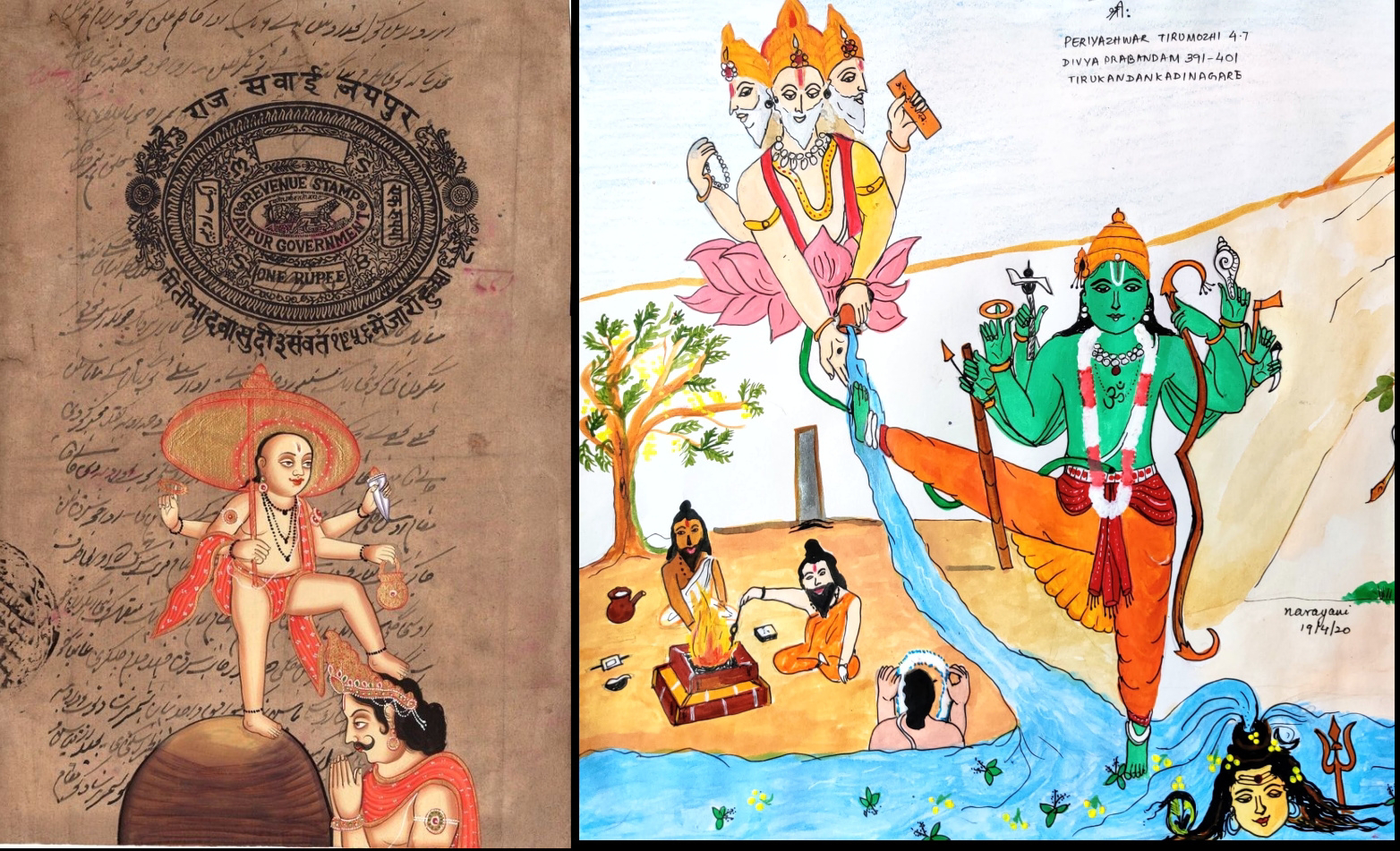
The Vamana Story - ವಾಮನಾವತಾರ


ವಾಮನಾವತಾರ
ಅದಿತಿಸುತ ವಾಮನಗೆ
ಅನುದಿನವು ನಮನ
ಅತಿವಿಕ್ರಮನು ಇವ
ಅನವರತ ಪೊರೆವ

ಪ್ರಹ್ಲಾದನ ಪೌತ್ರ
ಬಲಿಚಕ್ರವರ್ತಿ
ದಾನವರ ದೊರೆ ಈತ 
ದಾನದಲಿ  ನಿರತ

ಅಸುರರಿಗೆ ಅಮೃತವು 
ಸಿಗದಿರೆ ಬಲಿಯು
ಗುರುವಿನಾಜ್ಞೆಯ ಮೇರೆ
ಮಾಡೆ ಮಹಾಯಜ್ಞ

ಆ ಯಜ್ಞ ಫಲದಿಂದ
ವಿಶ್ವಜಿತ್ ಬಲಿಯು
ದೇವದಾನವರ್ಗೆಲ್ಲ
ದೊರೆಯಾಗಿ ಮೆರೆದ

ಆಗ ಜಗದೋದ್ಧಾರ
ಹರಿಯ ಅವತಾರ
ಅದಿತಿಕಶ್ಯಪಪುತ್ರ 
ವಾಮನ ಸುಚಿತ್ರ

ಪುಟ್ಟ ವಟು ವಾಮನನು
ಬಲಿಯಜ್ಞದಲ್ಲಿ
ಕೇಳ್ದ ಮೂರಡಿಯಷ್ಟು
ಭೂಮಿ ಬಲಿಯಿಂದ

ಅರಸು ಅಸ್ಮಿತದಲ್ಲಿ 
ಅಸ್ತು ಎಂದಂದ
ವಾಮನನು ನಸುನಕ್ಕಿ
ಬೆಳೆದ ಮಹಕಾಯ

ಎರಡ್ಹೆಜ್ಜೆಗೇ ಅಳೆದ
ಭೂಮಿ ಆಕಾಶ
ಮೂರನೆಯ ಹೆಜ್ಜೆಯನು
ಎಲ್ಲಿ ಇಡಲೆಂದ. 

ಈ ತ್ರಿವಿಕ್ರಮಗೆ ನಮಿಸಿ
ಶರಣಾದ ಬಲಿಯು
ಶಿರದಲ್ಲಿ ಹರಿಪಾದ
ಬಲಿಯಮರನಾದ

ವಾಮನಗೆ ನಮಿಸಿದರು
ಅಸುರಸುರ ಜನರು 
ಋಷಿಪುಂಗವರ ಸ್ತುತಿಗೆ
ಒಲಿದ ಶ್ರೀ ಹರಿಯು

ಹರಿಪಾದ ಪೂಜಿಸುತ
ಧರೆಗಿಳಿಯೆ ಗಂಗೆ
ವಾಮನನ ಅವತಾರ
ಶುಭವಾಯ್ತು ನಮಗೆ 


Rsachi 28 April 2025


Tuesday, July 14, 2020

Sri Gurupadukastotram


This glorious prayer to the sandals/footwear of the Sri Guru has been composed by the colossus 

We recently went through this great composition as we were taught by Swami Tejomayanandaji of Chinmaya Mission. I am therefore inspired to write this blog. I shall attempt to give the shloka meanings word-by-word and my own understanding.

1.
  • नालीकनीकाशपदाधृताभ्याम् - the pair of footwear that bear the lotus-like feet (of the Guru)
  • नारीविमोहादिनिवारकाभ्याम् - that remove the infatuation with women (/men) and so on,
  • नमज्जनाभीष्टततिप्रदाभ्याम् - that confer fulfilment of a series of desires for devotees who bow down,
  • नमो नमः श्रीगुरुपादुकाभ्याम् - to that sacred pair of footwear, our repeated obeisances.
2. 
  • शमादिषट्कप्रदवैभवाभ्याम् - that have the glory of conferring Shama and other six-fold virtues to the seeker,
  • समाधिदानव्रतदीक्षिताभ्याम् - that are vow-bound to confer Samadhi on the true seeker,
  • रमाधवाङ्घ्रिस्थिरभक्तिदाभ्याम् - that grant us firm devotion to the feet of Narayana, Lord of Lakshmi,
  • नमो नमः श्रीगुरुपादुकाभ्याम् - to that sacred pair of footwear, our repeated obeisances.
3. 
  • नृपालिमौलिव्रजरत्नकान्तिसरिद्विराजज्झषकन्यकाभ्याम् - that are like a pair of divine mermaids shining in  shimmering waters as they dazzle amidst a series of glittering crowns of a line of kings bowing down to the Guru for his grace,
  • नृपत्वदाभ्यां नतलोकपङ्क्तेः- and that, equally, confer lordship to the line of even ordinary devotees bowing down to the Guru ,
  • नमो नमः श्रीगुरुपादुकाभ्याम् - to that sacred pair of footwear, our repeated obeisances.
4. 
  • अनन्तसंसारसमुद्रतार​-नौकायिताभ्याम् गुरुपादुकाभ्याम् - that divine pair of footwear of the Guru that function as the boat to save us from the endless seas of worldly bondage,
  • वैराग्यसाम्राज्यदपूजनाभ्याम् - and confer on us the kingdom of dispassion when worshipped,
  • नमो नमः श्रीगुरुपादुकाभ्याम् - to that sacred pair of footwear, our repeated obeisances.
5.
  • पापान्धकारार्कपरम्पराभ्याम् - that are like a series of suns to dispel the darkness of sinful and ignorant acts,
  • तापत्रयाहीन्द्रखगेश्वराभ्याम् - that are like Garuda, lord of birds, to the mightiest of serpents that are the three-fold troubles faced by mankind,
  • जाड्याब्धिसंशोओषणवाडवाभ्याम् - that are like the mythical submarine fire that dries up the ocean of man's inertia in spiritual matters,
  • नमो नमः श्रीगुरुपादुकाभ्याम् - to that sacred pair of footwear, our repeated obeisances.
6. 
  • कवित्ववाराशिनिशाकराभ्याम् - that are like the moon who inspires the sea of poetic and spiritual insight to wax,
  • दारिद्र्यदावाम्बुदमालिकाभ्याम् -that are like a series of rain-bearing clouds to put out the fire of misery and wretchedness of man,
  • दूरीकृतानम्रविपत्ततिभ्याम् - that ward off the dangers faced by devotees,
  • नमो नमः श्रीगुरुपादुकाभ्याम् - to that sacred pair of footwear, our repeated obeisances.
7.
  • नता ययोः श्रीपतितां समीयुः - those bowing down to which pair acquire immeasurable prosperity akin to Lakshmi's consort Vishnu,
  • कदाचिदप्याशु दरिद्रवर्याः - even when they may be indeed the most wretched lot at present, 
  • मूकश्च वाचस्पतितां हि ताभ्याम् - and alike, a dumb mute becomes the lord of eloquence, bowing down to the pair,
  • नमो नमः श्रीगुरुपादुकाभ्याम् - to that sacred pair of footwear, our repeated obeisances.
8. 
  • कामादिसर्पव्रजभञ्जकाभ्याम् - the pair that destroy the serpentine enemies of man like lust,
  • विवेकवैराग्यनिधिप्रदाभ्याम् - and graciously grant the immense wealth of discrimination and dispassion to the devotee,
  • बोधप्रदाभ्याम् द्रुतमोक्षदाभ्याम् - that confer wisdom, and quickly enable liberation of the bound soul,
  • नमो नमः श्रीगुरुपादुकाभ्याम् - to that sacred pair of footwear, our repeated obeisances.
9.
  • स्वार्चापराणामखिलेष्टदाभ्याम् - to the one dedicated to contemplation of the Self, they grant all desires (which will naturally be of a spiritual nature),
  • स्वाहासहायाक्षधुरन्धराभ्याम् - they bear the immense weight of Lord Shankara himself (with fire as his  third eye), as his footwear,
  • स्वान्ताच्छभावप्रदपूजनाभ्याम् - and they on worship grant one infinite felicity of revelling in the Self,
  • नमो नमः श्रीगुरुपादुकाभ्याम् - to that sacred pair of footwear, our repeated obeisances.
    We can see that the Sringeri Swamiji has poured great spiritual instruction into this prayer. He has described the immense glory of even the footwear of the Guru and how worshipping them frees us from bondage and takes us to liberation and grants us true devotion.

    My thoughts on going through this prayer are as follows. God, as we intuit Him, in infinite glory, is beyond thought and perception for us. In His infinite grace, to redeem us, He manifests as the Guru in human form. The Guru is glory himself as he attracts us, gives us the right direction, insight, and liberation, constantly guiding us through this world of delusions and attractions and addressing our sense of being impoverished.

    Even as we say this, we can at once see that even the Guru is thus beyond our comprehension. He is God in human form. The only thing we can express to him is devotion. But our devotion is in too small a measure even to reach him. So an immediate and ready opportunity presents itself to us: to worship his footwear! His footwear appear to be of material access, but indeed they hold within themselves all the power to grant us devotion, insight, and even liberation. Liberation from a sense of want and incompleteness, and liberation in the form of realising Sat-Chit-Ananda-Brahman.  So it is an easy beginning for us to worship the Guru's padukas.

    Om Tat Sat!


    Postscript: Some versions of this Stotram have a different sequencing of verses. For example Chinmaya Mission. The sequence shown here is taken from the 1913 publication of Sri Vani Vilas Press, Srirangam. This press was set up by a disciple of the Sringeri Swamiji, the author of the Stotram. I therefore believe this is the original. 

    Wednesday, November 8, 2017

    November 8, 2017: The Baby Krishna


    || śrī līlāśukaviracita śrī kṛṣṇakarṇāmṛtam  ||

    karāravindena padāravindaṃ 
    mukhāravinde viniveśayantam          |
    vaṭasya patrasya puṭe śayānam
    bālaṃ mukundaṃ manasā smarāmi  ||2-57 ||

    Re-ordered word-by-word meaning
    smarāmi manasā - I remember with all my mind(=heart!)
    mukundaṃ Mukunda=Narayana=Krishna, who gives liberation, as
    bālaṃ - that baby who
    karāravindena  - with his lotus-like hands, 
    padāravindaṃ - (taking up) his lotus-like foot,
    viniveśayantam - was placing it   
    mukhāravinde - in his mouth, which was lotus-like, 
    śayānam - while resting on 
    vaṭasya patrasya puṭe - the Peepal/Ashwattha leaf  surface.

    This imagery is beautifully depicted in the Srimad Bhagavatam and narrated in this famous shloka by Sri Lilashuka. The Lord Narayana=Krishna, as a baby, is envisioned as lying only on an Ashwattha leaf, sucking his toe. It is after the great deluge, when everything in creation disappears. Now the entire universe is in its latent form, resting in Narayana's stomach. He is about to send forth the creation anew.


    We need to understand our mythology as a grand conception of the cycle of creation, and its dynamic interaction with the Creator, in a way we can see everyday in our lives. Anybody who has tended an infant in the cradle would be able to relate to this imagery.

    Tuesday, October 24, 2017

    October 24, 2017: Saroruhanabha


    Composition of Maharaja Swati Tirunal

    nītihatāhita pālaya mām- śuddhalalitā

    Pallavi

    nītihatāhita pālaya mām saroruhanābha 
    ghanābha madebhagate 
    dhrtaveda manojñatan0 krpayāva mām suhasa

    Anupallavi

    pāta pāṇḍavayoṣha pāpajālahara
    cāruphāla navahemaceladhara gopabāla jaya

    Charaṇam

    rāghava mām pālaya ripujita madana 
    suguṇasadana vimalaradana dayārṇava
    rīṇapāpa bahughoratāpahara bhūmijāpa sura pālaka parama


    Re-ordered word-by-word meaning

    nītihatāhita -One who is the enemy of those who break the code of ethics,
    pālaya mām saroruhanābha - protect me, oh the One with the lotus in the navel,
    ghanābha - with the hue of a rain cloud,
    madebhagate - with the gait of an elephant in rut,
    dhṛtaveda - who carried the Vedas (Matsyāvatāra)
    manojñatano - with an attractive form, 
    kṛpayā ava mām suhasa - kindly protect me, Oh one with a smiling face,

    pāta pāṇḍava yosha - the one who saved the wife of the Pandavas,
    pāpajāla hara - the one who dispels the maze/cage of sins,
    cāruphāla - with a beautiful forehead, 
    nava hema cela dhara- wearing a lovely golden garb,
    gopabāla jaya - Oh Cowherd boy, glory to you!


    rāghava mām pālaya - Oh Rama, please take care of me, 
    ripujita - conquerer of enemies,
    madana - lovely like Manmatha, 
    suguṇa sadana - the storehouse of virtues, 
    vimala radana - with spotless teeth, 
    dayārṇava - the ocean of mercy,


    rīṇa pāpa - the remover of sins, 
    bahu ghora tāpa hara - the remover of very terrible sufferings, 
    bhūmijāpa - worshipped by Mother Earth (refers to Varāhāvatāra)
    sura pālaka -protector of the gods, 
    parama - Oh Supreme One!

    Monday, September 4, 2017

    September 4, 2017: Srimad Bhagavatam


    śrīmadbhāgavam

    SB 2.4.12

    śrī-śuka uvāca
    namaḥ parasmai puruṣāya bhūyase
     sad-udbhava-sthāna-nirodha-līlayā
    gṛhīta-śakti-tritayāya dehinām
     antarbhavāyānupalakṣya-vartmane

    SB 2.4.13

    bhūyo namaḥ sad-vṛjina-cchide ’satām
     asambhavāyākhila-sattva-mūrtaye
    puṁsāṁ punaḥ pāramahaṁsya āśrame
     vyavasthitānām anumṛgya-dāśuṣe

    śrī-śukaḥ uvāca — Śrī Śukadeva Gosvāmī said

    namaḥ parasmai puruṣāya bhūyase  - I offer obeisances to the Supreme Personality of Godhead, the complete whole; 
    līlayā - (who has) through His pastime of
    sad-udbhava sthāna nirodha -the creation of the material world, its maintenance and and its winding up,
    antaḥ-bhavāya dehinām- resides within all who possess material bodies gṛhīta -through assuming
    śakti tritayāya  - the potential of the three modes Sattva, rajas, Tamas, and thereby
    vartmane anupalakṣya -operates in inconceivable ways!

    bhūyaḥ -again; namaḥ - my obeisances (to the One); 
    sat vṛjina cchide -who removes the distress of the devout; 
    asatām asambhavāya - who destroys the wicked,
    akhila sattva mūrtaye -the embodiment of all that is good and true;
    punaḥ - and again, 
    dāśuṣe anumṛgya puṁsām - the One who grants liberation to the men 
     pāramahaṁsye āśrame vyavasthitānām - who are placed in the station of life seeking liberation through spiritual practices.

    The Srimadbhagavatam is, perhaps, apart from the Ramayana, the biggest source of devotional scriptural guidance for the Hindus. Portraying the manifestations of Vishnu for the benefit of all creation by timely intervention, the Bhagavatam narrates a captivating story.
    The story begins with a situation when King Parikshit (son of Abhimanyu) realises that he is destined to die within seven days. He seeks spiritual instruction from Shuka, the born-wise son of Vyasa, the author of Mahabharata, Vedas and the Puranas.

    Shuka begins his instruction with these verses. You can make out how the narrative will progress. 
    I see a total connect between Bhagavadgita and Vishnusahasranama and Bhagavatam.

    Happy Onam to all!

    Saturday, September 2, 2017

    September 2, 2017: Muktinath


    śrīviṣṇusahasranāmastotram - dhyānaślokaḥ

    kṣīrodanvatpradeśe śucamanivilasat saikate mauktikāyāṃ mālākḷptāsanasthaḥ sphatikamaṇinibhaiḥ mauktikaiḥ 
    maṇḍitāṅgaḥ ।
     śubhrairabhrairadabhraiḥ upariviracitaiḥ muktapīyūṣavarṣaiḥ 
     ānandī naḥ punīyād arinalinagadāśaṅkhapāṇirmukundaḥ ॥

    mukundaḥ - May Mukunda= Vishnu, 
    ari nalina gadā śaṅkha pāṇiḥ  -holding the discus, lotus, mace and conch, 
    ānandī  - with a blissful countenance, 
    maṇḍitāṅgaḥ - seated 
    mālākḷptāsanasthaḥ - on a throne bedecked with garlands of pearls,
    saikate mauktikāyāṃ śubhrairabhrairadabhraiḥ upariviracitaiḥ muktapīyūṣavarṣaiḥ - shining bright, amindst pearls, dressed up in the copious shower of pearly rain by white clouds in the sky,
    śucamanivilasat kṣīrodanvatpradeśe - looking like crystalline pure gems, in the resplendent region of a milky white expanse,
    punīyāt naḥ - (May that Vishnu) sanctify us.

    This prayer comes at the beginning of Vishnu Sahasranama.
    We recited it at Muktinath, a sacred shrine to Vishnu visited by great Sri Vasihnava Saints, at 13000 feet altitude in Nepal Himalayas, also called Saligram for the unique sacred stones available in the Gandaki river there.  I immediately felt that this prayer refers in fact to that exact deity in that exact spot, with the word mukti/maukti appearing in all the three lines describing Vishnu's abode.